
|
KABUL, Sept 1
(Reuters) - A reality TV show broadcast in Afghanistan has encouraged Afghans to
start their own enterprises, stirring entrepreneurial spirits in a country that
has been ravaged by three decades of war.
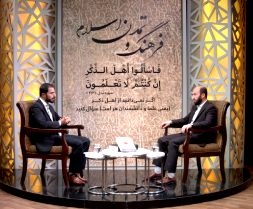
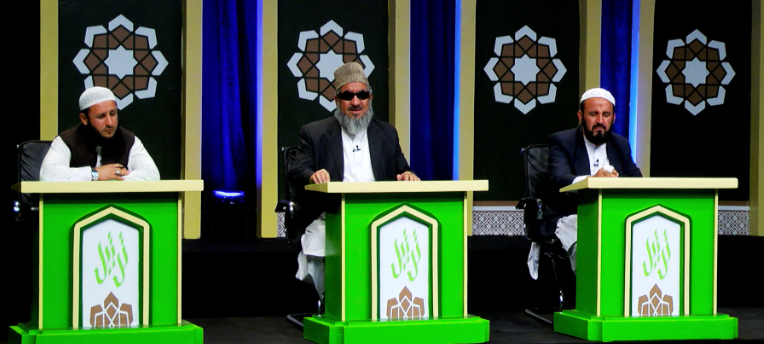
The program, "Fikr
wa Talash", or "Dream and Achieve" in English, is loosely based on the popular
"Dragons Den" series, in which contestants pitch their business ideas to a panel
of tycoons in return for cash for their companies.
The programme, the
latest in a series of popular reality shows that have taken Afghanistan by
storm, is more than just entertainment. Its supporters hope that by encouraging
small businesses, the program will help Afghanistan's economy become more
self-reliant.
"Small and
medium-sized businesses, which are by far the largest employer, be it small
self-employed farmers selling a surplus or a shop-keeper, trader ... are the key
to achieving such self reliance," said David Elliot, a development consultant
for the program's makers.
"Yet business
skills and thinking, such as financial planning, marketing, competitive
strategy, are all relatively new concepts that are needed to create a stronger,
more resilient and healthy private sector, capable of being the 'engine of
growth' for the economy," added Elliot.
Decades of war have
devastated the Afghan economy and infrastructure and Afghanistan is still one of
the world's poorest countries despite receiving billions of dollars of
international aid since 2001.
The Afghan
government relies on aid for about 90 percent of its total expenditure.
Unemployment stands at around 40 percent with 80 percent of Afghanistan's labour
force employed in agriculture. GDP per capita stood at just $1000 in
2007.
The show's
sponsors, including U.S. government aid agency USAID, mobile phone operator
Roshan and Bank-e-Milli, saw the program as an opportunity to foster an
entrepreneurial spirit among ordinary Afghans.
The first series
ended in August with the final contestant winning $20,000 towards his plastic
recycling business.
It was broadcast on
Tolo TV, Afghanistan's most popular channel which also aired the hugely popular
Afghan Star, a homegrown version of the U.S. singing contest, American
Idol.
AFGHAN
REALITY
Reality TV shows
have engrossed Afghans who in the past suffered stuffy state broadcasts and an
outright ban on television under the Taliban government of the late
1990s.
"Reality TV is very
big all over the world, that's why we wanted to make something where we could
both help people, get ideas and also provide entertainment," said Masood Sanjar,
a production manager for Tolo TV.
The program was
popular among viewers who tuned in every Wednesday night to watch contestants
plug their business ideas to judges from the local business
community.
"At first we
couldn't believe we got so many people," said Sanjar. "Then we saw that after
every show we would get even more people coming forward." The show's top five
contestants represented Afghanistan's complex and diverse social makeup,
including an ex-warlord who had laid down his guns to start up a
dairy.
"What I really like
is that one of our contestants, a former commander, still comes with 10 armed
guards to the show," said Sanjar.
"But when he goes
in, there is a woman sitting there asking him questions. This shows a real
balance. It shows the change of life in Afghanistan."
"WOMEN NOW HAVE A
CHANCE"
The winner was
Faizulhaq Moshkani, a middle-aged father of nine who owns a plastic recycling
plant in his native Kandahar in southern Afghanistan.
Moshkani had shut
down the factory due to the high cost of fuel to power generators. But the
$20,000 prize money will enable him to move the business to Kabul where he plans
to build a mini hydroelectric plant to power the new recycling
factory.
"I feel very good,"
said Moshkani after the show. "Starting a business in Afghanistan is very easy
but moving this business forward is very problematic."
Moshkani's
recycling plant will enable the recycling and production of plastic inside
Afghanistan rather than relying on imports from neighbouring countries such as
Pakistan.
"It was a great
pleasure for me to start producing something in Afghanistan," said
Moshkani.
Mariam Al Ahmadi, a
25-year-old mother of five from western Afghanistan, collected the runner-up
prize of $10,000. That's a significant amount of money in a country where half
the population live on $1 a day.
Five years ago Al
Ahmadi set up her own jam and sauce company. Collecting fresh produce from
villages and farms around her native city of Herat, she produced jars of
conserves and sauces that she sold at local shops.
"After this
programme I can now make my business bigger. I am very happy with the result,"
she said.
Al Ahmadi and
another woman from Herat finished in the top five on the show, a sign of change
in a country where women were not allowed to work at all, let alone run their
own business, under Taliban rule which ended less than seven years ago. "Before,
people in Afghanistan, especially women, couldn't do business," says Al Ahmadi.
"But now women have a chance."
However,
Afghanistan still remains a deeply conservative country where women have been
attacked and even killed just for appearing on television. Al Ahmadi dresses all
in black, revealing only her eyes and insists she is doing nothing
wrong.
"Some of my
relatives say: "Look Mariam is a woman and she is on TV!" says Al Ahmadi. "But I
remain calm and tell them I'm appearing on television under Islam. I have my
veil on!"
"Every Afghan woman
can work under Islamic law. Islam permits them to work," she
says.
Tolo is working on
a second season for the show and it also plans to run a follow-up episode with
the top contestants to track their progress. (Editing by Megan Goldin)
|